In the middle of the 1990s, the internet opened the door for gambling to the most limited extent, and no one was thinking that this would be the future of one of the biggest entertainment industries in the world. Those who played at that time had no option but to use the very slow dial-up connections and, as a result, were stuck with very basic graphics that were more like school computer lab projects than casino games.
Nevertheless, the idea of remote gambling somehow became popular. The option of having real-money gaming at home appeared as something novel and even modern. By the early 2000s, when broadband had already become widely available in the US and Europe, virtual casinos were already being seen as a mainstream form of entertainment rather than a mere novelty.
The Early Days of Online Gambling
The very first online casinos were not only ambitious but also very clunky at the same time. The range of games offered by the online casinos was very restrictive like just slots, blackjack, and even roulette, all of which were run by software that had to be downloaded first. Methods of payment were still unhandy, with the payment systems either usually failing or taking several days to process. However, the novelty factor was strong enough to attract a small but permanent group of players.
As time went by, technology gradually improved, and later on, the regulators did the same. The countries started to draft laws that would set the guidelines for online fair play, while the licensing authorities were verifying the operators. These steps have been the foundation of today’s global online casino market. By the mid-2000s, gaming had become an international business and new software developers were rushing to draw attention to their games through great graphics and fast performance.
How Casino Software Works
The Random Number Generator (RNG), a technology that most players are not aware of, is behind every digital spin or shuffle. It is the mathematical engine that ensures that every outcome is completely random. The very existence of this technology is what gives the players the confidence they need to continue playing. RNG systems, being the mainstay of online gambling, are subject to scrutiny; they are tested and certified by independent agencies that are impartial in the matter of the results, and as a result, the players can be sure that a slot or roulette game online behaves the same way it would in a physical casino. These audits have become mandatory in most regulated markets, thus forming a standard that future operators must adhere to.
Not only RNGs are there, but also the modern gambling software and the tech-savvy gaming world where the games come alive in different ways - through visuals, audio, and engaging storylines. The evolution from primitive 2D graphics to breathtaking 3D has brought the online casinos closer to the cozy and entertaining atmosphere of a real casino. Some of the gaming features now resemble those of video games, as missions, levels, and achievements are incorporated into the regular odds.
The Mobile Revolution
The smartphone's rise to prominence was the beginning of a new chapter. Players were no longer restricted to the desktop to place their bets. For them, spinning the reels or playing poker was just a matter of being on the move, having a lunch break, or simply being in front of the television.
In the beginning, users opted for mobile-inspired casinos that featured a great deal of ease-of-use in the design and super-fast loading times for the games. The buttons were enlarged, menus were simplified, and everything was adjusted to allow for gaming at a fast pace. With the introduction of 4G networks throughout the globe, live dealer gaming was also made possible. This is an extraordinary transformation. Bettors are now able to be at a live table that is being broadcasted from a professional studio where workers are dealing out cards or playing with the roulette wheel. The games had the same kind of RNG-based verification systems but the human aspect added to the overall impression of reality. It created a mix of the thrill of being in a live casino and the liberty of playing wherever you want.
Fairness and Player Trust
For online gambling business, trust is the most important thing. Trust is the basis for all licensing and then the casinos are very transparent in their operations. The majority of the real casinos show the players their Return to Player (RTP) rates, meaning the percentage of all wagers that usually return as winnings.
A slot with a 96% RTP implies that players will get back $96 in the long run for every $100 wagered. This does not mean that players will win in the short run, but it does help them to know the odds. There are independent testing agencies that regularly audit the RNGs and the payout ratios to ensure they match what the operators claim. Some online casinos even show their reports, providing a guarantee of adherence to standards. This type of transparency has become a symbol of professionalism in the digital gaming industry.
Why Players Choose Online Casinos
One of the main factors affecting the use of online casinos is convenience. Anyone can instantly gain access to a huge selection of games, from traditional tables to video slots that are as good as video games, with just a few clicks or taps. No need to travel, no specific clothing required, and no time limit. However, at the same time, it is not only a matter of accessibility. Warm relationships and communities have developed around online casinos. Gamers chat with each other, watch streamers playing their sessions, and enter competitions that have a prize attached to what was formerly a lonely experience. The digital bond between people, although not physical, is still a significant factor in keeping the fun going.
Responsible Gaming in the Modern Era
The increase in online gambling led to the awareness of risks linked to it. Hence, the authorities and the companies involved in gambling started to pour in a huge amount of money for the different means to support responsible gaming. These means include the ones that set a cap on the amount of money a player can lose, the ones that enable a player to take a break, and the ones that let a player quit totally.
Technology has made it possible to easily detect risky behavior. Some platforms either apply data analytics or use AI systems to identify addiction in gaming. The unusual deposits or bets of a particular player could be the cause of the system triggering the alert or reminding that player.
In the UK, Canada, and the U. S., the regulators have made it compulsory to implement these measures. The advertising is limited, the verification of age is implemented, and the support for people with gambling problems is promoted on the gaming platforms. The change indicates an industry that is responsible and transparent, which recognises the need for balance.
How the Player Experience Has Evolved
The experience of modern-day online casinos would definitely be beyond recognition for the very first users of the internet. The whole redesign process has taken the consumer from the olden times of online gaming to the present era of immersive digital experience. The combination of music, visual effects, and smooth transitions now gives the play a feel that is seamless and natural.
The game developers take their cue from the main gaming platforms and bring in the storylines, levels, and progress tracking features. This is one of the reasons why the casino experience today is very much like entertainment as opposed to pure gambling. The payment methods have also changed — instant deposits, digital wallets, and cryptocurrency transactions are some of the factors that have made cash flow faster and more secure.
There are some who maintain that the online casinos have been absorbed into the larger digital entertainment ecosystem. The casino games are now there, existing with mobile gaming, esports, and streaming platforms. This blending has ensured that they have become an accepted part of online culture.
Regulation and Global Standards
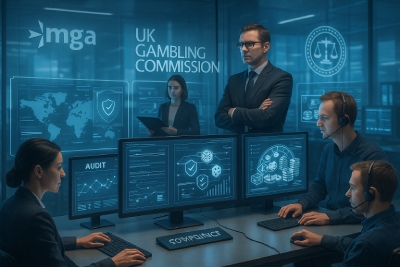
Regulatory frameworks are never the same in every country, but always very similar in purpose: they assure fairness, safeguards for the players and no frauds. It is the same with the licensing authorities like the Malta Gaming Authority, the UK Gambling Commission, and the U. S. state regulators; they all ask for thorough audits of the systems managing money and data. Players' funds will be in the separation from the company's operational accounts; therefore, in case of the closure of the company, the customer's balances will still be available. This one rule has created a massive trust between players and the casinos that are really legal.
The logos at the bottom of gambling websites are representing a network of accountability — auditors, legal teams, and IT specialists ensuring the games run properly and payments are handled securely. This oversight is comparable only to a few other entertainment industries.
New Frontiers in Online Gaming
The next wave of innovation has already started. Cryptocurrencies and blockchain are opening up novel paths for transaction processing and fairness verification. A public ledger can bear every spin or bet done, thus paving the way for the end of intermediaries.
Virtual reality is another boundary that has to be crossed. VR casinos are testing out the fully immersive virtual worlds where players would have the ability to walk around, see and talk to others, and play the games that will react to their actions. This is nothing less than the most entertaining activity combined with the utilization of the newest technology.
On the other hand, the introduction of each new idea brings back the same old problem – the regulations. The government will have to keep up with the technology that is constantly changing. The future is still uncertain regarding the fate of blockchain and VR being either a niche or a mainstream, they are however, revealing to us how much the "casino" universe has already widened beyond the limits of the physical.
The Cultural Shift of Digital Gambling
The existence of online casinos has come to influence the popular culture in very surprising ways. They are frequently included in movies, songs, and streaming services, thus, almost completely losing the distinction between gaming and entertainment. The younger generation regards them in a different light, seeing them as a part of the digital lifestyle, not as a taboo topic.
The gambling became more community-oriented due to the introduction of social features like live chat, leaderboards, and interactive tournaments. Some professionals perceive this trend as a healthy modernization. Meanwhile, others are concerned that the risk-taking is being overly normalized. The debate is still on, but it clearly indicates that online gambling has reached a point where it is part of a global cultural conversation.
What the Future Holds
The technology behind online casinos is still matching the pace of their development. Possibilities have greatly increased with every change — desktop to mobile, 2D to live video, and fiat currency to crypto.
The direction of the future looks very well-defined. Players are demanding faster, more transparent and more reliable services. Regulators insist on stronger consumer protections. Developers intend to create more engaging and immersive experiences. Somewhere in this coexistence lies the next chapter of the digital bookmaker.
The evolution from the very simple graphics of the 90s to the current smooth, mobile-oriented platforms has been really amazing. The transition from a mere tech experiment to an international trend has been a combination of entertainment, innovation, and human curiosity that continues to cycle forward.